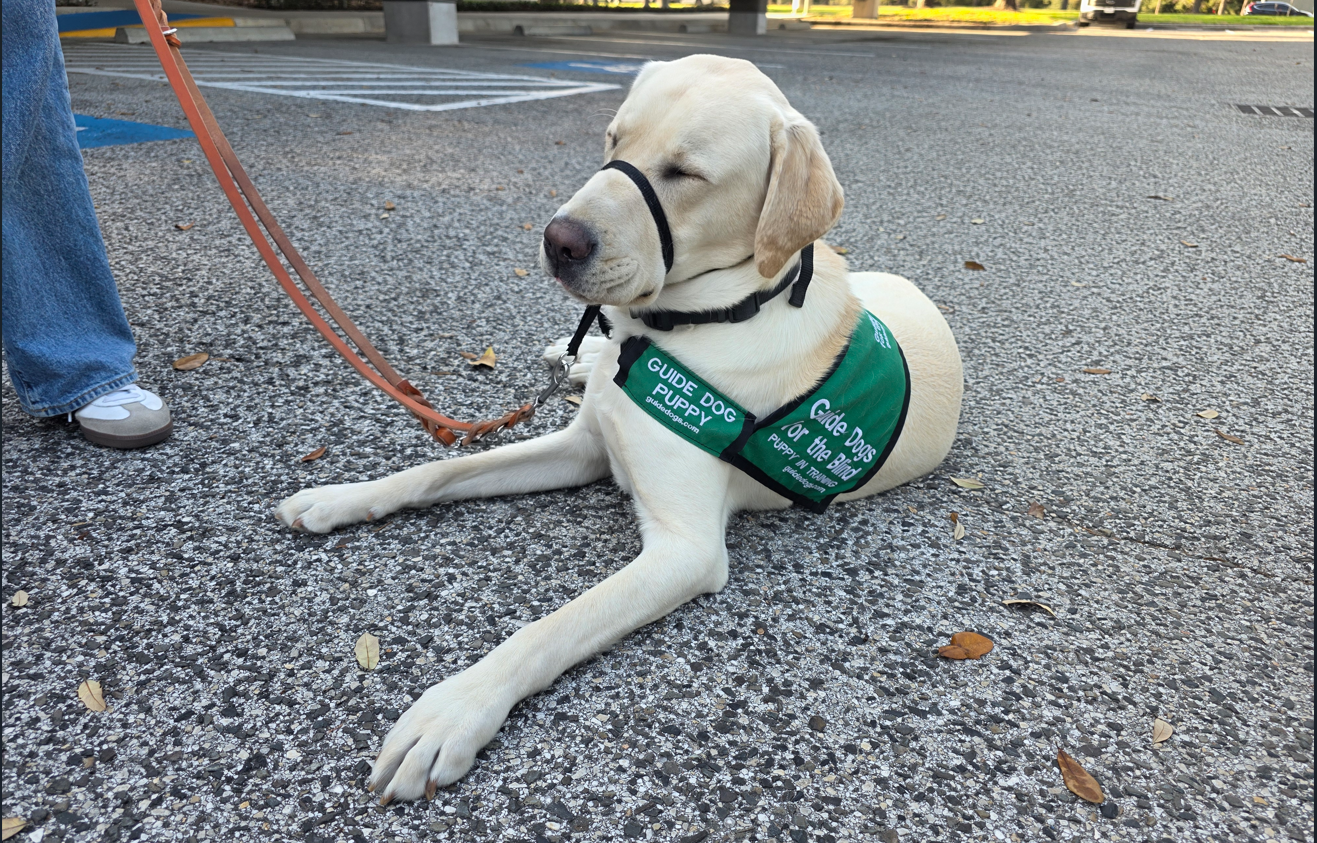
Training the next generation of guide dogs inside IAH
Houston Airports hosts hands-on familiarization tour to strengthen accessibility and service animal readiness.
Mar 2, 2026
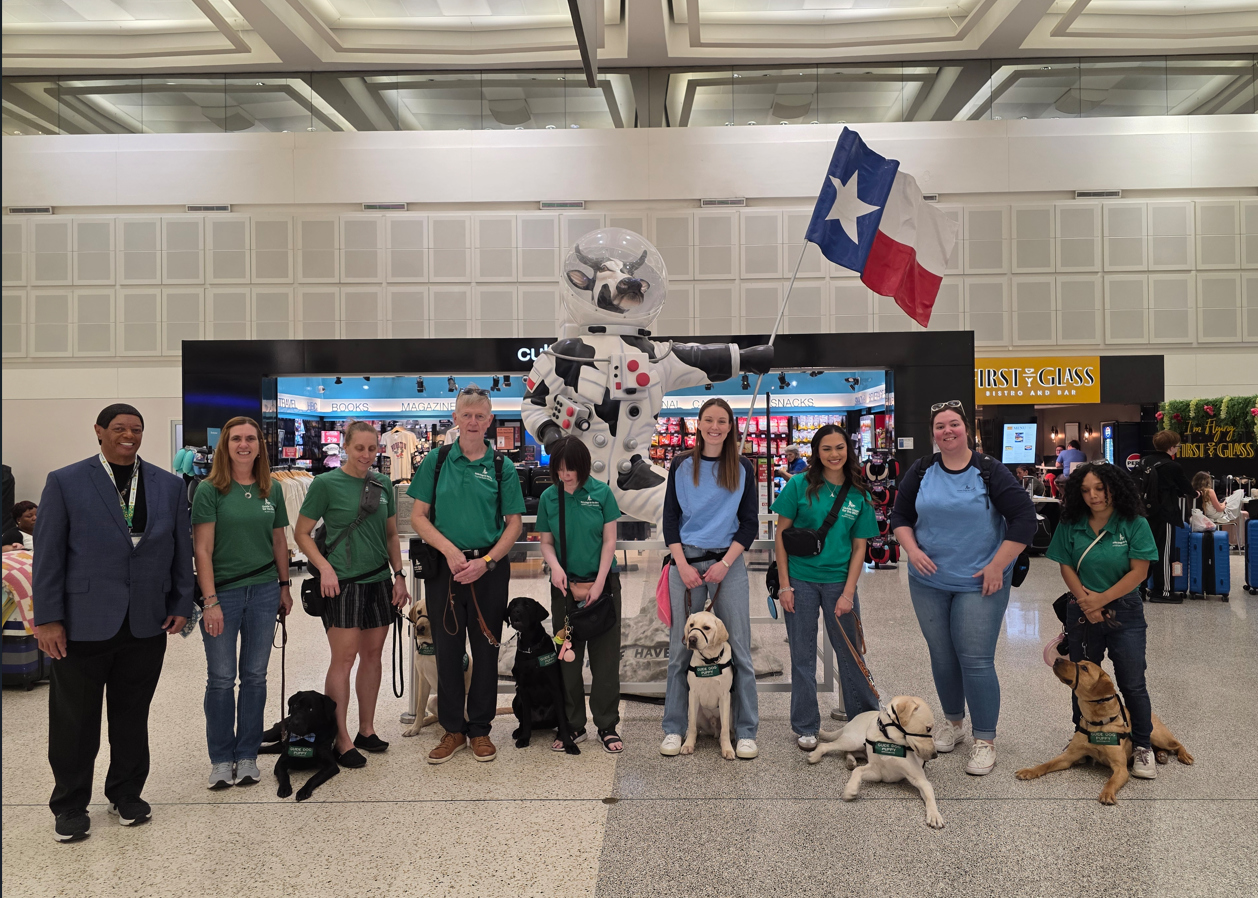
Before a guide dog ever boards a commercial flight with a passenger who is blind, it must learn to navigate one of the most complex environments in modern travel: the airport.
On a Saturday in February, Houston Airports hosted an airport familiarization training tour at George Bush Intercontinental Airport (IAH) for the Houston chapter of Guide Dogs for the Blind (GDB). The purpose was straightforward: to expose puppies in training and their handlers to the real conditions they will encounter on travel day.
That meant more than walking a quiet corridor.
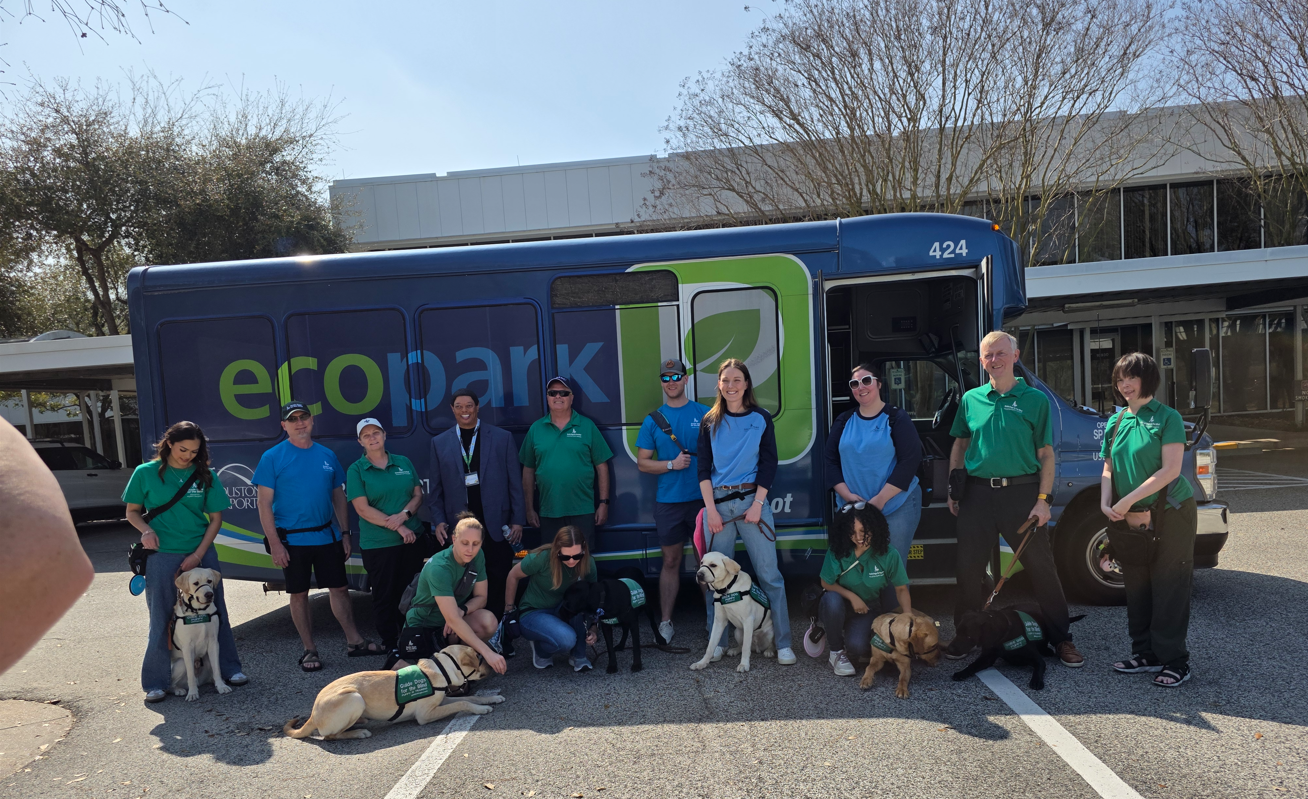
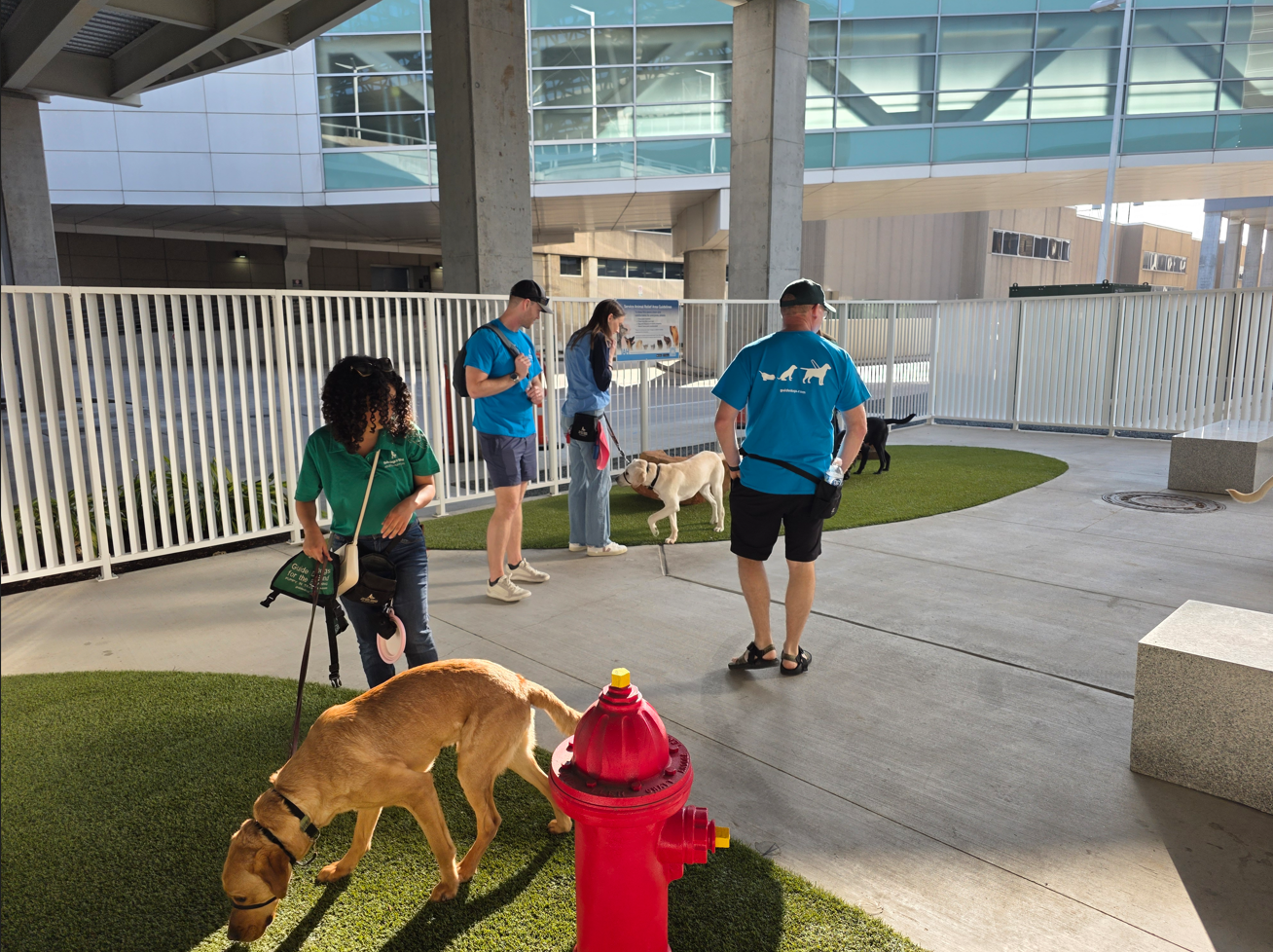
The group rode IAH shuttle buses, processed through a TSA security checkpoint, traveled on the Skyway and visited Service Animal Relief Areas (SARA).
Puppies rode ecopark shuttle buses and practiced boarding and exiting alongside passengers. They processed through a TSA checkpoint. They moved through ticketing counters at American Airlines while trainers reviewed required federal service animal documentation and airline procedures. They traveled the Skyway between terminals and visited multiple Service Animal Relief Areas, including the new outdoor SARA at Terminal E.
Airports are layered environments — moving walkways, shuttle buses, security lanes, loudspeaker announcements and unpredictable crowds. Controlled exposure builds confidence and focus before a dog is paired with a person who depends on it for mobility and independence.
The training is also instructive for the airport.
Guide dog trainers gain insight into airport operations. Airport teams gain perspective on how checkpoint procedures, signage, ground transportation and terminal design affect travelers who rely on service animals.
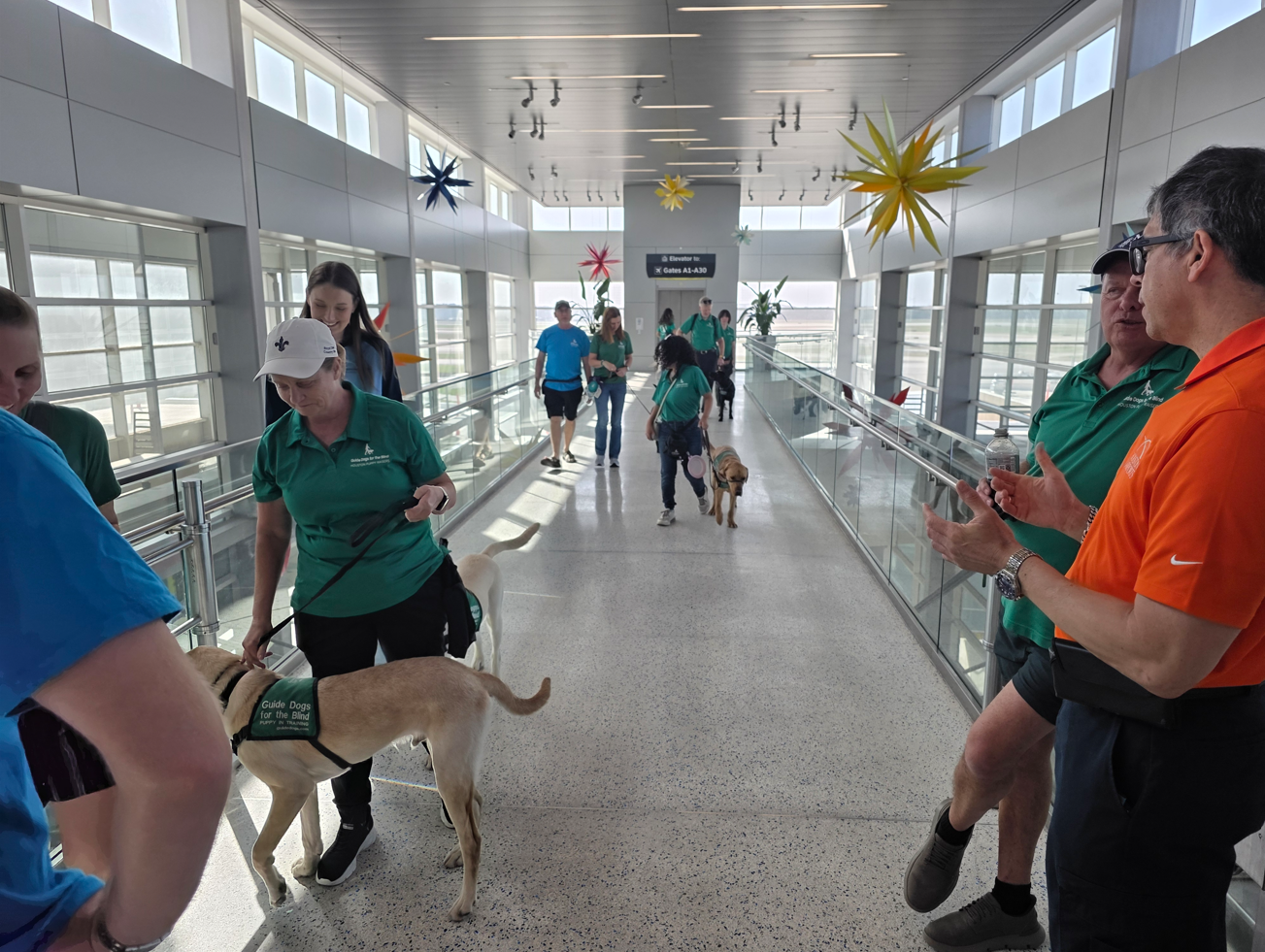
“Familiarization tours like this give us real-time feedback,” said Anthony Brown, ADA coordinator for Houston Airports. “We’re able to observe how service animals respond to the airport environment and identify opportunities to improve the experience for travelers with disabilities. That collaboration strengthens our ADA program and makes us better prepared on travel day.”
From curb to gate, the effort reflects a broader operational priority: accessibility at scale.
As the largest guide dog school in North America, Guide Dogs for the Blind has graduated more than 16,000 guide dog teams across the U.S. and Canada since 1942. All services are provided free of charge, including personalized training and ongoing support, funded entirely through donors and volunteers.