Ready before the freeze
Behind the scenes, Houston Airports employees worked long shifts to keep operations moving.
Jan 27, 2026
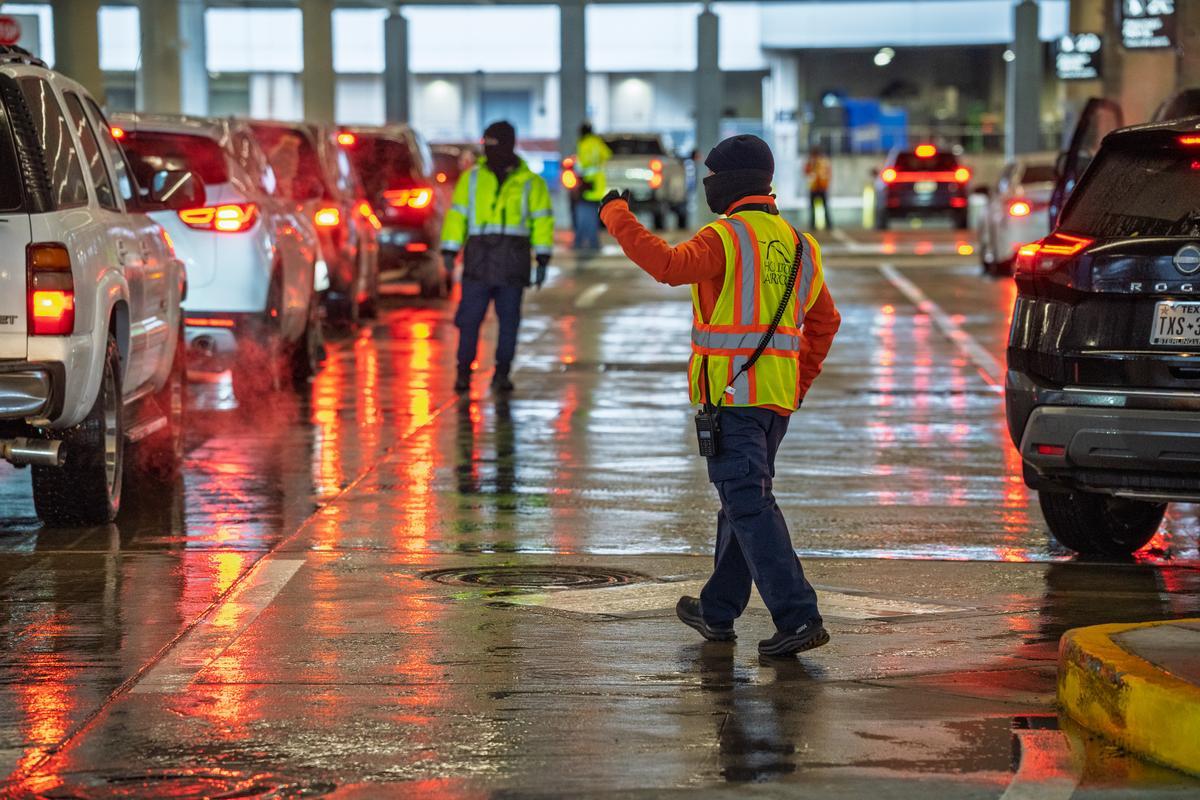
Houston doesn’t see many freezes, but when it does, the airports feel it first.
Outside, temperatures had dropped below freezing — an uncommon stress test for a region built for heat, humidity and hurricanes. Inside, travelers rolled suitcases, paused at information desks and adjusted plans in real time. Houston Airports employees in bright orange jackets were already in place, answering questions and pointing the way forward.

That steadiness did not happen by accident.
Nearly a week earlier, as forecasts began to harden, Houston Airports leadership initiated preparations that most passengers would never see. Equipment was rehearsed. Plants and pipes were protected. Staffing plans were adjusted. Employees were given time to secure their homes and families before reporting for extended shifts.
 “What stands out most is how steady our people were,” said Kelly Woodward, chief operating officer for Houston Airports. “Clear communication, teamwork and a focus on service carried us through long shifts and cold nights.”
Across George Bush Intercontinental Airport, William P. Hobby Airport and Ellington Airport, employees moved into 12-hour rotations. Some slept at the airport so operations could continue without interruption. Emergency Operations Centers were activated at Bush and Hobby. Facilities stayed clean, accessible and safe. Passenger flights continued. Cargo kept moving. Systems held.
 “This is what being ready to fly looks like,” said Jim Szczesniak, director of aviation for Houston Airports. “Preparation, discipline and people who know their jobs. Our teams followed the checklist and made decisions early, when it still mattered.”
Much of that work unfolded outdoors.
Airfield and maintenance crews treated bridges, overpasses and pavement in freezing conditions that leave little room for error. Inside terminals, operations teams coordinated continuously with airlines, federal partners and the City of Houston.
 “Our employees were everywhere passengers needed them,” Woodward said. “Answering questions. Giving directions. Assisting travelers with disabilities. Keeping facilities safe and clean. That level of care doesn’t stop when conditions get hard.”
 At Hobby Airport, a customer service representative stood near an information desk, radio clipped at their side, scanning the terminal for the next traveler who might need help. Nearby, another leaned in to explain rebooking options to a family whose flight had changed overnight.
Those quiet, practical moments — what Houston Airports calls Houston Friendly — repeated themselves hundreds of times across the system.
At Hobby Airport, a customer service representative stood near an information desk, radio clipped at their side, scanning the terminal for the next traveler who might need help. Nearby, another leaned in to explain rebooking options to a family whose flight had changed overnight.
Those quiet, practical moments — what Houston Airports calls Houston Friendly — repeated themselves hundreds of times across the system.
They were shaped by hard-earned experience.
After Winter Storm Uri exposed deep vulnerabilities across Texas in 2021, Houston Airports took a critical look at its cold-weather readiness. That review led to a significant investment in specialized deicing and snow-removal equipment, acquired in 2023 and maintained on site at Bush and Hobby by Top Dog Services.
The payoff came quickly.
In January 2025, another round of extreme cold tested the region. Houston Airports activated early planning protocols, coordinated across agencies and maintained operations while much of the area braced for disruption. The systems held because they were already in place.
This winter, coordination extended beyond airport property. METRO adjusted service as conditions worsened. Airlines issued weather waivers and rebooked passengers. Travelers were urged to slow down, allow extra time and stay in close contact with their carriers.
Many did.
City leaders and the traveling public largely heeded those warnings, easing pressure on roadways and terminals during the most challenging hours. That shared restraint allowed airport teams to focus on what they could control — safety, communication and continuity.
Another cold snap may still be ahead.
Houston Airports is not waiting for it to arrive. In a city where winter storms are rare and expectations are high, readiness is no longer a reaction. It’s a discipline — practiced early, reinforced often and carried out by people who understand what it means to keep a major Southern hub flying when the forecast turns unforgiving.
